



Heated floors: which flooring should you choose?
05 Aug 2026
What are the best flooring options for heated floors?
What if your floor did more than just look beautiful… what if it also added to your comfort every day?
Heated floors are becoming more and more popular, and for good reason. They provide gentle, even and comfortable warmth underfoot. But to enjoy all the benefits, choosing the right flooring is essential.
Not all materials react to heat the same way. Some transfer it efficiently, while others tend to block it.
What to understand before choosing
A heated floor works through thermal conduction: the heat produced by the system rises through the flooring material to warm the entire room evenly.
Unlike a traditional heating system, the warmth does not come from one specific source. Instead, it radiates across the full floor surface, creating a steady, enveloping level of comfort every day.
So, the more conductive the material, the more effective and efficient your heated floor system will be. The right flooring allows heat to circulate easily, with minimal energy loss and a faster response time.
On the other hand, a material that is too thick or too insulating will slow heat transfer. The result? The system needs to work harder to reach the desired temperature, which can reduce comfort and increase energy use.
That is why your flooring choice matters so much: it directly affects efficiency, response time and the feeling of warmth underfoot.
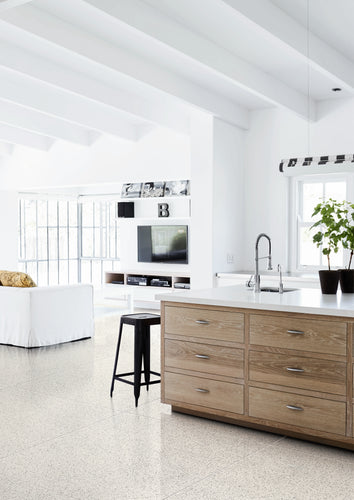
1. Tile and stone: the best-performing options
If you are looking for maximum performance with a heated floor, tile and natural stone are among the best options to consider.
Because of their density and heat-conducting properties, these materials allow for fast, even and efficient heat distribution throughout the room. The result is an almost immediate feeling of comfort underfoot, even in cooler spaces.
• Excellent thermal conductivity for fast and even heat distribution
• Retain heat longer for lasting comfort
• Highly resistant to temperature changes and moisture
• Durable materials, ideal for high-traffic rooms
Another advantage: once heat has built up, tile and natural stone release it gradually, helping maintain a stable temperature for longer, even when the system is running less frequently.
Tile and porcelain are considered some of the best flooring choices for a heated floor, both for their performance and their long-term reliability.
Perfect for:
• Bathroom
• Kitchen
• Basement
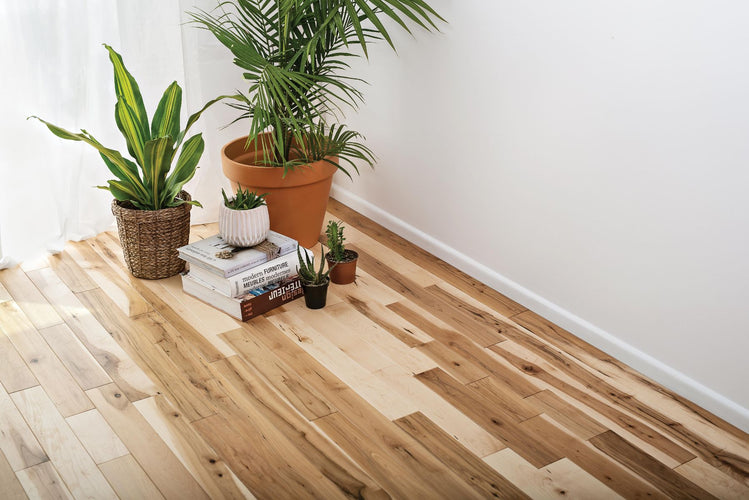
2. Engineered wood: the best compromise
Want to keep the warmth and character of wood with a heated floor? It is possible, as long as you choose the right material.
Engineered wood flooring is specifically designed to offer better stability, making it a much more suitable choice than solid hardwood in this type of installation.
• More stable construction, less affected by heat
• Helps reduce the risk of swelling, shrinking or cracking
• Better suited to humidity changes
• Lets you keep the authentic look of wood
It is the best compromise for enjoying the look of wood without sacrificing the performance of a heated floor.
To avoid:
• Solid hardwood, which is more sensitive to temperature changes
Tip:
• Choose thinner planks to improve heat transfer
3. Sheet vinyl: practical and efficient
Increasingly popular in residential projects, vinyl stands out as an option that is accessible, versatile and well suited to heated floors.
It allows for excellent heat transfer from a heated floor while still offering everyday comfort. Its slight flexibility also makes it feel softer underfoot than more rigid materials, especially in living areas.
• Good thermal conductivity, especially in thinner formats, which are ideal over a heated floor
• Comfortable and pleasant underfoot
• Moisture-resistant, ideal for areas more exposed to humidity
• Easy to maintain day to day
• Available in a wide range of wood- and stone-look styles
Some models are even specifically designed to be compatible with heated floors, which makes them an even more attractive option for this type of installation.
Perfect for:
• Basement
• Kitchen
• Family spaces
An excellent choice if you are looking for a stylish look at a more affordable price, without giving up comfort, even with a heated floor.
4. Laminate flooring: an accessible option
Laminate flooring can also be used with a heated floor, as long as you choose a compatible product that is well suited to this type of installation.
It is an interesting option for projects where budget matters, while still offering a versatile look, even with a heated floor.
• Can handle the temperature changes associated with a heated floor
• Simple and quick to install
• Good value for money
• Available in a variety of wood-look styles
When chosen carefully, it can deliver satisfactory performance with a heated floor, especially in residential spaces.
Keep in mind:
• Use an underlayment that is compatible with heated floors so it does not block heat transfer
• Always check the manufacturer’s recommendations before installation
Choosing the right flooring for a heated floor
Choosing the right flooring for a heated floor makes all the difference, both for comfort and for everyday performance.
Tile and stone remain the most effective options with a heated floor, thanks to their ability to distribute heat quickly and evenly. Engineered wood offers an excellent compromise for those who want to enjoy a heated floor while keeping the warm, natural look of wood.
Vinyl and laminate flooring, on the other hand, are accessible and versatile alternatives for a heated floor, as long as you choose products that are specifically designed to be compatible with this type of installation.
The important thing is to consider the type of room, your lifestyle and the specifications of your heated floor system. A well-informed choice will help you maximize your system’s efficiency while creating a comfortable, durable and enjoyable space to live in every day.
To find the ideal flooring for your heated floor project, visit a store or browse our collections online. Our experts are here to guide you every step of the way.


